A couple days late, but here we are!
March Charity of the Month: Mercy House
02 Monday Apr 2012
Posted in charity, Charity of the Month
02 Monday Apr 2012
Posted in charity, Charity of the Month
A couple days late, but here we are!
27 Monday Feb 2012
Posted in charity, Charity of the Month, education
“Young people are capable of doing widely extraordinary work, their voices should be heard.”
If you’re one of those people who think you can’t make a difference in the world, I hope this Charity of the Month changes your mind.
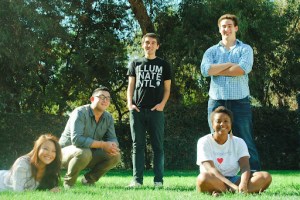
Mike Kang was a freshman in high school when he started a youth activism campaign, which sprouted from a documentary made by Invisible Children. After his fellow students saw the documentary, Mike noticed there was a large response from students who were interested in the cause, but did not have an avenue or system on how they could get involved.
Most high school students would probably shrug their shoulders, and move on to their next class. But Mike decided to actually create the means through which his fellow students could be active participants for these causes, straight from school. So he created Generation Against Global Injustice (GAGI). One thing Mike really liked about this organization was that it was breaking the stereotype that young people can’t do much, or that young people can’t make a difference in the world. They can, and they did. In four and a half years, GAGI raised over $10,000 for partner organizations like Invisible Children, Just One, and One Day’s Wages (to name a few).
So what does GAGI have to do with Illuminate International? After Mike graduated from high school, he decided he wanted to focus on education, so it would be aligned with his career path in education and educational policy. So GAGI became Illuminate International. Why “Illuminate International”? Because their mission is to light the fire so that students can get an education, and because their purpose is to shine light on the issue of education, and lack of education in developing countries.
The plan is that Illuminate International will have one year partnerships with organizations that are working on education in developing countries, and Illuminate International will raise money for that partner organization throughout the year. The plan is also to use their growing network and social networks, such as YouTube, to bring awareness to education issues in developing countries, to people here in the United States.
Mike was inspired to act by his own childhood: growing up in Palos Verdes, he had access to everything he needed to succeed in life. After watching the documentary by Invisible Children, he realized that not everyone has this privilege: people have no access to the same things he had. Mike decided it was his responsibility to use these privileges for the public good, and to lend a helping hand were he could.
And he is doing just that.
Illuminate International wants to help schools become the central hubs of communities in developing countries, so that individuals realize that education is the only way for upward mobility for themselves and their families, and for the community to make education their main focus.

Mike hopes that years down the road, Illuminate International will be a political voice, a voice that can influence policy and the educational community, to make a political impact. In discussing who the lack of public education in developing countries can be attacked, Mike said “the governments have to take action, they have to setup quality public schools, have their own infrastructure instead of relying on nonprofits: individual governments have to take action and invest in their education.” I have no doubt that Illuminate International will try to make this a reality.

19 Thursday Jan 2012
Posted in charity, Charity of the Month

I’m sure you’ve seen the commercials…children with cleft palates and other facial deformities. As with similar commercials that tug at the heartstrings, sometimes it’s easier to change the channel than to sit through and watch it. But, the reality of it is still there. Aimee Cornell realizes this and is joining an organization that is taking action to help children with facial deformities. She’s going with Uplift Internationale, on their annual Operation Taghoy in the Philippines. Appropriately enough, “Taghoy” is a Philippine word for “whistle”!
04 Sunday Dec 2011
I had grandiose plans since last year: compiling a massive gift guide the likes of which have never been seen before. But, 1) they pretty much already exist online (not exactly as I had envisioned it, but still, it’s been done), and 2) December 2011 came around much quicker than December-2010-me imagined it would.
Holiday Gift Guide
http://viewer.docstoc.com/?key=NTllOTA1N2Ut&pass=OGRlZi00OTQwvar docstoc_docid=”107159738″;var docstoc_title=”Holiday Gift Guide”;var docstoc_urltitle=”Holiday Gift Guide”;
15 Tuesday Nov 2011
Posted in charity, Charity of the Month
“From the minute you wake up in the morning, perfect strangers are lining the streets cheering you on, sharing their stories and inspiration with you. There are people with t-shirts and signs that say ‘Your efforts saved my life’ — and it is true, with the amount of money each event raises (my last San Diego event raised $14 million — and the 3 Day is in 14 cities!), incredible strides are being made in detection and treatment. And, too, there are times in our lives where we are facing a seemingly insurmountable challenge and then I remind myself that I walked 20 miles a day for three solid days, something I never thought I could do — three times now! I can certainly deal with the little curve balls life throws me.”
“I feel that people should donate to the Susan G. Komen foundation because the disease they are combatting is one that affects us all. I look around at the girls in my classroom and think 3 or 4 of them will have breast cancer if we don’t find a way to cure, or at least diminish, the rate of this cancer. I have a student who lost her 32-year old aunt to breast cancer. I have a co-worker who lost BOTH parents to breast cancer. The youngest breast cancer survivor on my walk in ’08 was only 11 years old. I would challenge anyone to stand in a room with eight women and find that none of them has been personally affected by this disease.”

01 Tuesday Nov 2011
Posted in charity, Charity of the Month
I’ve driven by it dozens of times, either on my way to PLC when I volunteered there throughout law school, or now on sporadic trips to the Central Justice Center for court hearings. I had a vague idea about what they did, but based on the name alone I knew it had to be pretty awesome. I kept putting it off though, until they were featured by FLOC last month. I figured, it’s a sign! So, a day late, here’s a little write up of what I found out.
In Spanish, a “taller” is a workshop, “a place to build and repair things.” And San Jose is Spanish for Saint Joseph, who’s the patron saint of workers.
Now that we’ve got the lingo down, let’s get down the business. What does Taller San Jose (“TSJ”) do? Simple: it walks young people in Orange County out of poverty. How do they do this? It’s actually not-so-simple.
In the words of TSJ’s Executive Director, Shawna Smith, one of the main jobs of the staff of TSJ is to fan what little hope these young individuals have when they walk through the lobby of the quaint Santa Ana location. In a short amount of time, these young individuals know that people care for them, that people mean it when they say “I care about you and your success,” that someone has their back. Many of these individuals come to TSJ with troubled pasts, difficult financial situations at home, and who knows what else. Letting them know that their goals are important, that they are a person with dignity, and that their life is important, is not easy. Most of us take these things for granted: I have a mother who made these things clear to me, and I grew up in an environment that led me to believe I could be anything I wanted to be. This is not the situation for many of the participants of the programs at TSJ.
“You mean I’m worth more than a minimum wage job? Woah.”
During my tour of their offsite facility where construction classes are held, I had an opportunity to hear from Scott, who has become a leader in his classroom, and has maintained perfect attendance throughout his program: “I feel like I can do something now, I can go out and get a job. If it wasn’t for this program, I’d probably still be doing drugs.” That’s an amazing and powerful statement for this organization, and only one of over 4,500 people that this organization has served since it opened its doors in 1995. I’m sure this is what Shawna noticed when she joined TSJ back in 1997, and her future career as a teacher went out the window: “I just felt called to serve.”

Back when Shawna first joined TSJ, it looked a little different than it does today. The program was centered around a high school completion program, with a carpentry program that taught students how to make benches, custom cabinetry and entertainment centers. Around 2005, TSJ realized there was a better way to help create long term success for it’s students: it began to emphasize more on job placement, and a little less on high school completion programs. Why? “For a young person who has an economic need, they don’t have four years to commit to just sitting in a high school classroom.” So they started to focus more on job training and job placement, while still helping their students complete high school if they hadn’t completed it yet.
This shift, however, had a huge impact on who they could serve: “Before, we had a much greater tolerance for serving kids without papers. When we switched to the workforce, we had to ask for papers. This was a huge ideological shift, one that we still struggle with: these kids look the same, they talk the same, they go to the same schools. But we can’t broker employment if we know they’re undocumented, and their opportunities for advancement [within our program] are so limited: we don’t want to set them up with unrealistic expectations, that just tears a person down.”
Although TSJ had to turn away some who are just as needy as others, it’s done a fantastic job of perfecting a program to ensure that those it does serve, are served well. For example, recognizing that most of their students can’t go to classes and miss an opportunity to earn money to cover expenses at home, TSJ students earn a $100 weekly stipend, and TSJ provides vouchers for transportation and child care.
TSJ operates through three different academies:

Of these, Shawna admits that the construction academy is usually the most appealing, or “sexy” to people; it’s harder to look at the office programs and realize what’s going on: there is a level of sophistication involved in a working environment and being in a professional setting.
Regardless of the Academy that each individual goes into, TSJ is doing much more than just providing an academic training. TSJ has set 7 goals for each student:
The last one is probably the most challenging in our economic times, and one that I found really interesting. There is a difference between a minimum wage, and a living wage. In California, the minimum wage is $8.00 an hour, but the living wage in Orange County is more like $16.00 (California Budget Project, 2010). I love that this program focuses not on the minimum allowed by regulations, but on the reality of the financial needs of individuals in the specific geographic location they live in.

Given the financial downturn, TSJ has made a few adjustments to help their students and alumni find and maintain jobs. For one, they have created jobs themselves through the Hope Builders program. For another, they are creating new programs in areas where there is a new need. For example, within the construction program TSJ has started to offer a 40 hour training on solar panels, recognizing a field that may have increased need in the future. Seeing growth in the medical industry, TSJ is also implementing new programs in the medical academy, such as billing and coding.

Another change has been to make the program more of a 2-year program than a 16-week program: rather than classes to provide a specific skill set in an area, TSJ offers courses on writing resumes, mock interviews, job coaching, personal development workshops on financial literacy, healthy relationships, etc. TSJ checks in with each student at specific intervals throughout the 2-year program, to make sure the student is still on track, and working towards completing the 7 goals listed above.
The hope is that these changes will allow their graduates to find a job, and help them keep it.
The results of TSJ’s holistic approach are pretty amazing. 70% of students remain employed one year after graduation. And, my favorite statistic, only 8% of students with a criminal background are re-arrested (meaning that 92% of students do not reoffend). In California, the rate of recidivism is around 70%. Pretty cool, right?
Shawna originally switched from the original non-profit she was working with to TSJ because she wanted to work in an organization that was effectuating change. Based on the programs she’s helped start, and the effect they’re having on the lives of hundreds of individuals, I’d say her and TSJ are doing pretty well!
Hopefully you’ve stuck around long enough to get to my favorite part: how you can get involved!
An immense thank you shout out to Shawna, who dedicated more time than I’m sure she had available to entertain my questions, to Liana for coordinating my tour through their facilities and putting me in contact with Shawna, and to my tour guide, who provided so much helpful information.
13 Thursday Oct 2011
Posted in art, charity, shoes, shopping, Things I want
23 Friday Sep 2011
Posted in charity, Charity of the Month, Guatemala
They decided to adopt. Then they decided to adopt from Guatemala. Then someone else decided they should actually go to Guatemala before they adopted a child from there: “You have to find ways to give back to a country that is going to be giving you the gift of a child.” It’s funny, isn’t it, how a simple nudge from someone else can completely change your life. Bill and Cherie did just that, and in 2004 they traveled to Guatemala, where they met Tita two nights before their flight back to the U.S. They had already spent eight days meeting people, places, and things. But they hadn’t met Tita yet, or La Limonada, or their future.
Tita turned out to be their inspiration: a woman who for five years had been singlehandedly working in one of the most dangerous and largest urban slums in Guatemala: providing care, comfort and food to the most vulnerable of the vulnerable. La Limonada is basically a settlement in a ravine, considered a Red Zone area because of how dangerous it is, and home to about 60,000-100,000 people. These people live in one of 10 different districts, each of which are ruled by rival gangs and invisible but life-threatening boundary lines.
What did Tita show Bill and Cherie on their last day in Guatemala? She showed them the shanties where families lived huddled together, she showed them families that dulled their hunger pain by sniffing glue, she told them about the sexual abuse that runs rampant in La Limonada, she told them about the gang violence and warfare that had her attending at least one funeral a week. But she also showed them the school she had started, she showed them the children she looked after, she told them about her plans for the future: how she wanted to be able to teach more kids, she wanted to reach out to gang members and show them a different way of life, she told them about wanting to start a vocational center for those gang members, she told them about wanting to send kids to school.
Seeing and hearing these stories changed their lives. As much heart and as many plans as Tita had at the time, she was overwhelmed by the amount of work and money that it took to do everything she was doing or wanted to do. Bill and Cherie saw the need and opportunity to step in and help, and they did. And you know what? They’ve pretty much made all of Tita’s plans a reality.
Bill and Cherie founded Lemonade International and started raising money for Tita and La Limonada, and Bill allowed me to ask him some questions about how all of this came about. Here’s what happened since they founded Lemonade International, as a volunteer side project:
This is all just the beginning stages! Bill talked about their plans to buy a building that will house the vocational training program. The program is still in the initial stages, and often they don’t have the room or a safe location to consistently have their classes in. They are currently looking at a building that is located in between the two schools, they just have the difficult task of raising the funds to purchase it. Ideally, this building will house training classes for sewing, carpentry, masonry, electrician training, etc.
Of course, these accomplishments and goals for the future are no easy feat to come by: Lemonade International is working in a country with difficult and straining conditions, among a dangerous population, and with the mentality of wanting to establish something that is not dependent on U.S. donors, but self-sustaining.
Sustainability. I love that word. One of the goals for the vocational center is that it will create businesses, like bakeries and carpentry shops, that will help maintain some of the other programs. The are trying to get this sustainability started by looking for a local Community Development Director: someone who will oversee all the programs in Guatemala, and to focus on the sustainability and long term plans of current projects.
This brought us to something else Bill thinks is important for the future of Lemonade International: engaging local people in Guatemala to support the work of La Limonada, to inspire them to care about their own country. We had an interesting conversation about classism in Guatemala: there is still a great divide between people of different socio-economic levels, not to mention indigenous mayans vs. ladino’s. It would be great if instead of having people from the U.S. going to Guatemala to lead these programs, you have Guatemalan’s caring about each other across these socio-economic divides, and leading these programs.
Bill recognizes that something like this will take time, and is steering clear of setting himself up for an “unrealistic disappointment.” He knows sustainability is something that will take time, and until then, raising support in the U.S. to help kids go to school, which may not be sustainable, is better than doing nothing.
Through it all, what keeps Bill and those around him going is seeing the smiles on children’s faces, smiles that weren’t there years before, children that walk with their heads held a little higher than they used to. What else keeps Bill going? His vision for the future of La Limonada:
I want to stand on the bridge overlooking La Limonada, and see people walking around confident in themselves and knowing their self worth, see people who know they can achieve things, that they are part of a community where good things are happening, a community with art, and music. I want to see houses painted with bright Guatemalan colors, and flower boxes hanging under windows. I want to see the hustle and bustle of business: tortillas being delivered, schools in session, festivals and parades. All of this, with no concern for violence.

19 Friday Aug 2011
Posted in charity, Charity of the Month, shopping, Things I want


02 Tuesday Aug 2011
Posted in charity, Charity of the Month, volunteer
Holy cow, July flew by. I think this might only be the first or second time that I fail in submitting my Charity of the Month on time :(
I was also having some trouble picking a charity, but then I went to a neighborhood clean up on Saturday, and the decision seemed obvious.