I read this article today, and it really upset me. So I wanted to share it.
Discussions on Development: The Right of Indigenous Communities to Hit the Airwaves
27 Friday Jan 2012
Posted in Castresana, CICIG, corruption, Guatemala, impunity, news
27 Friday Jan 2012
Posted in Castresana, CICIG, corruption, Guatemala, impunity, news
I read this article today, and it really upset me. So I wanted to share it.
22 Thursday Sep 2011
I apologize if my repeated posts about this woman are boring or uninteresting to some, but I truly believe that her story is worth writing about, or in my case, translating about. I think this case has brought Guatemala to a crossroad, and there are some exceptional women in that country who are trying to make sure they make the right turn, by not keeping silent. There are a couple blogs from the original writer who brought us this story that I have been wanting to translate, but they take more time in skill due to her exceptional writing, so they will come with time. But today, I came across the following opinion piece, and felt is was worth translating and sharing. The subject is something that I’ve wanted to blog about for over a year, and I just haven’t made the time to do so: why are women in our culture (by “our” I mean Hispanic) so frequently victims of domestic violence? And why do they remain in relationships marred by domestic violence? As a volunteer with several legal nonprofits, I have worked with women who were victims of domestic violence in order to help them apply for immigration relief (through VAWA and U-Visa petitions), and the degree and frequency of violence that so many of these women put up with has always scared me. Alas, I should save my “opinion” piece for my own blog entry…
The Robert Barreda Syndrome
(As published on September 22, 2011, in El Periodico)
In Guatemala, things have to change and the aggressors have to know that their only place is in jail.
Sylvia Gereda Valenzuela
Since 2001 I have worked and investigated the subject of femicide and aggression against women in Guatemala. I find it interesting that we have such an aggressive male population, that has caused more than 6 thousand women to die in the most cruel ways: tortured, severed in their private parts, raped, and mutilated.
In those days, Ciudad Juarez was a site of murders that moved the world. Ten years later, Guatemala left Mexico behind.
I got to know the case of Mindi Rodas, the woman who’s husband ripped off her face, nose and mouth with a knife and after a long battle for justice was murdered.
I got to know the case of Claudina Vasquez, a young woman who was going to be an attorney, that was first raped and then put on her knees to die with a bullet to the temple.
Towards the middle of this decade, while I was going through my masters in sociology, I completed a thesis about femicides in Guatemala, and then I had to course through the morgues, see puddles of blood that wet my shoes, the bodies of dozens of women that arrived cut in pieces and their faces bruised. That year, when I started my television project of Informe Especial (Special Report) on Canal Antigua, I decided to go back and check the pulse of this silent drama. I didn’t even have to take a step to realize that the problem had surpassed us.
In July I started to investigate the disappearance and murder of Cristina Siekavizza, where the principal suspect is her husband Roberto Barreda. A story already known by everyone, but where the aggregate of influence peddling, abuse of power by Barreda’s parents, Beatriz De Leon and Roberto Barreda, has been an important factor in keeping this case without any punishment and allowing the two minors to disappear along with their psychopath father, according to those who have declared to know the case: the judge Veronica Galicia and Norma Cruz.
I have found myself with more than three dozen messages and letters from women commenting that the story of Cristina has made them understand the dangerous drama in which they are submerged. Many, for the first time, seeing the criminal extremes that Barreda allegedly reached, are daring to break the cycle of violence and raise their voice.
“My sister that was married for 33 years with a psychopath, controlling and feticidal that followed her with a gun, hit her, etcetera. Today she has separated from him and she is getting fucked over. He left her in the street, even though he has millions in accounts in the United States and he uses his best friend as a figurehead. She gave him her whole life, since she was 19, she never finished her career nor did she ever work. He told her that he was never going to giver her anything, over his dead body.”
“He would get home late, drunk, aggressive, he would smack me around.”
“He left with some girl that was 20 years younger than him, got her pregnant. When I confronted him about it he grabbed me and hit me, he slapped me and insulted me.”
“I knew that he lived in bars and whore houses. On three opportunities he transmitted venereal diseases to me. He would threaten me that if I left him he would leave me in the street and ruin me forever, I have never worked.”
Norma Cruz, president of the Fundacion Sobrevivientes (Survivors Foundation), told me on one occasion that Guatemalan woman has started to talk about what she called the “Barreda Syndome,” many of the attacked women are seeing in Roberto Barreda, a man that appeared to not be aggressive but that was a despot at home, their own husbands. En the case of Barreda, nobody saw the alleged murderer of his spouse coming. But when everyone reacted, Cristina had ceased to exist and her children had disappeared.
I have always believed that we all came into this world with a mission, that no life is in vain, just like no death is in vain. Cristina has moved more hearts and sentiments with her death than she did with her life, this is a sign that her spirit continues still today and it can be the point of inspiration so that many women who have been attacked start to talk and ask for help from prosecutors, support groups, or organizations in defense of women.
For my part, these stories of terror that have hit so many guatemalan women hurt me to my core, and they motivate me to commit myself with what I will soon start as a new life project, to save thousands of women, teenagers, and girls who are victims of violence. If I can be sure of something, it’s that today, more than ever, I will not lower my voice and I ask the women that they don’t either. In Guatemala, things have to change, and the aggressors have to know that their only place is in jail.
15 Monday Nov 2010
A subject I have frequently written about is the Commission Against Impunity in Guatemala. I read a great article about it in the Washington Post today.
It was great to see the Washington Post write a long and thorough article on something that isn’t in the news much, and that no mainstream media has much of an interest for.
As usual with Guatemala, it’s depressing to see opposition to something that can actually help with the level of crime and impunity that exist within it. The CICIG has been facing opposition from various sectors since the very beginning, and I’m sure it will continue to face opposition for the remainder of its days. It just makes me sad.
It makes me sad because I read posts from my friend Isabel, who lives in Guatemala, and she talks about her frustrations with the crime and violence in Guatemala. People shut themselves in their house by 8pm. Their crime rate, as mentioned in the article, is three times that of Mexico. Three times. The crime rate of Mexico. Let that sink in for a bit.
So here’s an organization that is fighting corruption and crime, and trying to prosecute those before thought to be untouchable because of their political influence and/or wealth. But it has to fight to survive.
I hope the two year extension of the CICIG is granted, and I hope it continues to provide meaningful improvements to the government of Guatemala. I hope the people of Guatemala demand it, should anyone stand in the way.
05 Saturday Jun 2010

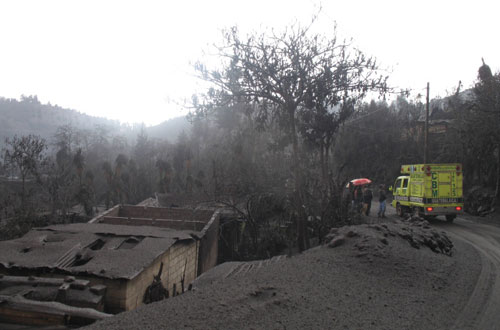
The last couple weeks have been a little rough in Guatemala. It started when the Volcan Pacaya started erupting a leeeeeeettle more aggressively that normal, and began spewing ash all over the city and surrounding areas. If I’m not mistaken, this may be the same volcano that my family and I hiked up to on Christmas Day back in 2007. Pacaya has been an active volcano for quite some time, but it’s been a little over ten years since it was this active.
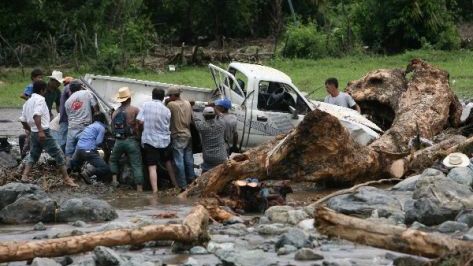
Next came tropical storm Agatha, which has killed around two hundred people in the Central American region, and left over 150,000 people homeless. The storm caused several mudslides, as well as the overflowing of several rivers, the destruction of bridges around the area, and has left some small villages inaccessible. The people that I’ve talked to from Guatemala haven’t been severely affected, thankfully. My grandma has been back here in the US for a while, so it’s a relief not to have to worry about her safety. Apparently one of her renters had to move to the downstairs apartment, since the weight of the ash and water started causing several leaks in the apartment. My heart goes out to the hundreds that have been affected by it, however, and will continue to be affected by it until they get the help they need to reconstruct their homes and get back on their feet. The UN already issued a statement on aid it will be disbursing.01 Tuesday Jun 2010
30 Saturday Jan 2010
Ok, I was going to write separate entries for these, but thought that might be a little over the top, so I’m just going to mix them all in one blog; I leave it up to each of you if you want to follow the links for more information. The first link is my original blog post, the second is the updated link :)
18 Monday Jan 2010
Back in May, 2009, the country of Guatemala was pushed into a social and political crisis: an attorney by the name of Rodrigo Rosenberg had been killed while riding his bicycle. Days after his alleged murder, a video surfaced in which Rosenberg stated that if he was dead, it was because the president of Guatemala, Alvaro Colom (among others), had ordered his death. The details are pretty intricate, but the main facts are that Rosenberg had been dating a woman, Marjorie Musa, who was killed along with her father. Rosenberg was allegedly investigating their murder, and in his video he stated this was one of the reasons why the President and others wanted him killed.
15 Sunday Nov 2009
Personally, I’m kind of excited that someone had the balls to stand up to a president who started trying to be the next Hugo Chavez. I know the international community is technically opposed to the coup, but I wonder if it’s just to save face: they have to be opposed to a coup. A coup isn’t the greatest example of a well run democracy, and what democratic nation (or organization) would want to publicly endorse a coup?
Here’s my thought: it was a good move. Zelaya was wanting to impose new constitutional reforms to stay in power, probably not unlike those that Chavez has “proposed” and keeps succeeding at. So the government took it upon itself to take action. The military, congress, and supreme court were all in agreement before the coup happened. I’m not saying it was the best course of action, but it was better than no course of action. The international community needs to be less concerned with saving face, and more concerned with preserving the democratic institutions that already exist. I hope the elections coming up at the end of the month will be given full legitimacy by the international community, with our without Zelaya.